

Google ads for healthcare can reshape the scene for your dental practice. The digital world shows that 84% of patients check online reviews before picking a provider. Your online presence matters now more than ever, as 51% of patients read at least six reviews.
Empty appointment slots giving you trouble? Many dentists share this challenge. All but one of these dental practices say their biggest hurdle is getting enough patients to make appointments. The average dental practice loses 15% of patients yearly, making digital marketing crucial to propel development. HIPAA compliance for dental ads creates its own set of challenges. Google ads for doctors are a great way to reach potential patients, but ignoring HIPAA rules can lead to big fines and hurt your practice’s reputation. This is especially true for dentist google ads, where tracking and conversion measurement must be handled carefully.
This piece walks you through a detailed HIPAA compliance checklist made just for dentists who use Google and Meta advertising platforms. This guidance is especially important when running facebook ads for dentists, where audience targeting and tracking require extra compliance safeguards. You’ll learn to protect patient information like names, treatment history, email addresses, and phone numbers. The guide also covers proper safeguards to market your practice while staying within regulations.
Understanding HIPAA in Dental Advertising
HIPAA regulations directly impact your dental practice’s advertising efforts, especially when you have digital platforms. These rules form the backbone of dental advertising compliance and define how patient information can be used in paid campaigns. Protected Health Information (PHI) covers any data that could identify patients along with their health details, treatment history, or payment records.
Your Google Healthcare ads need a clear understanding of PHI components. PHI has names, addresses, phone numbers, medical records, test results, billing information, health insurance details, appointment schedules, photographs, and even X-rays.
Meta (Facebook/Instagram) creates unique problems because it doesn’t provide a Business Associate Agreement (BAA) – something you need from third parties handling PHI. This limitation makes meta ads for dental clinics especially sensitive from a HIPAA compliance perspective. Google and Meta’s tracking pixels also collect visitor data that might contain sensitive health information without proper protection.
To cite an instance, see what happens if patients research specific dental conditions on your website. They might see related ads while browsing social media, which could reveal their health concerns to others. This type of retargeting might break HIPAA rules.
Dental advertising often breaks HIPAA rules. The most common mistakes are talking about someone as your patient without permission, using patient photos without clear consent, and sending PHI through unsafe channels.
The HIPAA Privacy Rule governs marketing and lets patients control their information’s use. Any message that asks recipients to buy services needs patient authorization, unless it’s about treatment or healthcare operations.
Complete HIPAA Compliance Checklist for Ads
Dental practices need a systematic approach to protect patient information while staying HIPAA-compliant in their advertising. This detailed checklist will help protect your practice and make your advertising more effective.
Your practice must obtain explicit written authorization before using patient testimonials or before-and-after photos in advertising materials. The documentation should specify why and how you’ll use the information.
Website forms collecting patient information need proper encryption and security measures. Note that all appointment request forms must follow HIPAA compliance with data encryption during transmission and storage.
Tracking technologies require special attention. You should avoid placing pixels on protected pages related to care, scheduling, or financial interactions. HIPAA regulations also prohibit custom audiences built from PHI.
Business Associate Agreements (BAAs) are essential for vendors who handle PHI. Since Google Analytics and many ad platforms won’t sign BAAs, you’ll need alternative solutions that remove identifiers before sending data to these platforms.
Your retargeting campaigns should only use broad audience-based targeting without patient identifiers. These restrictions apply directly to facebook ads for dentists, where improper retargeting can quickly lead to compliance violations. Healthcare retargeting needs extra care to protect sensitive information. Your staff needs regular training on HIPAA boundaries for all communication channels. Regular audits of marketing assets will ensure ongoing compliance.
Tools and Practices to Stay Compliant
The right technology tools are the foundations of HIPAA compliance for healthcare providers running Google ads. HIPAA-compliant CRM systems protect patient data and enable secure, encrypted communication across marketing channels.
Healthcare practices must implement these essential tools:
- HIPAA-compliant email systems that support encrypted communication
- Secure patient communication platforms that protect reminders and follow-ups
- Compliance-oriented review management tools that collect feedback without exposing PHI
- Analytics platforms that exclude personal identifiers
Any software that handles patient information needs secure data encryption with a signed Business Associate Agreement (BAA). Standard analytics tools like Google Analytics won’t sign BAAs. However, specialized solutions can strip identifiers before data reaches these platforms.
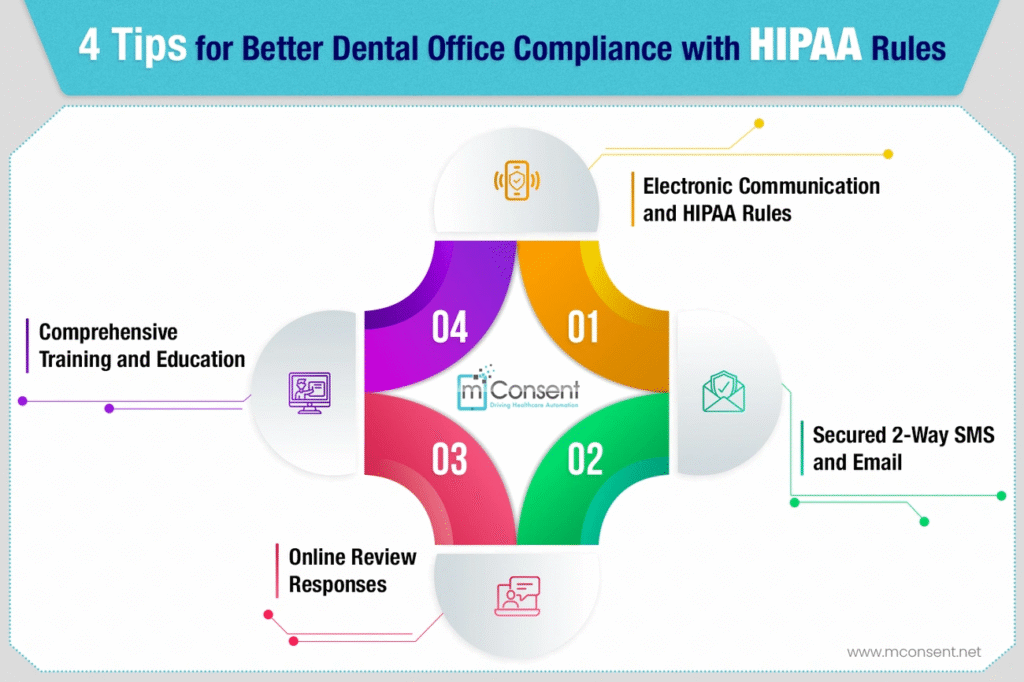
Your practice needs complete social media policies that spell out acceptable content and consequences for violations. Regular audits of marketing materials and anonymous reporting systems help catch potential breaches early.
Campaign development requires strict boundaries between personal and professional profiles to avoid PHI exposure. These boundaries are critical when managing meta ads for dental clinics, where staff access and content control must be tightly managed. Staff training plays a vital role. Teams need clear examples of non-compliant posts and guidance to redirect patients who discuss health issues on social platforms.
Blockchain technology and artificial intelligence solutions offer additional protection by managing decentralized PHI while preserving data privacy and integrity.
Conclusion
Dental practices need careful planning to run effective advertising campaigns while staying HIPAA compliant. We’ve looked at how HIPAA compliance for dental ads and patient privacy protection work together. Online advertising poses unique challenges for dentists, especially since 84% of patients research providers before booking appointments.
HIPAA violations can destroy your dental practice’s finances and reputation. Your practice must follow the compliance checklist we’ve outlined as standard procedure. Consistent execution of these steps strengthens dental advertising compliance across all marketing channels. This means getting proper authorizations, using secure forms, managing tracking technologies with care, and setting up necessary Business Associate Agreements.
Patient privacy protection goes beyond legal requirements – it builds trust with your patients. Your practice can run successful Google and Meta ads while staying within these boundaries. When structured correctly, dentist google ads can drive patient demand without compromising privacy or compliance.
Your practice should audit all marketing materials and advertising campaigns every quarter to maintain compliance. This helps you spot potential issues early. Despite its challenges, you can balance effective dental marketing with HIPAA compliance.
This detailed guide helps your dental practice confidently use digital advertising while protecting patient information. Your dedication to compliance shows your professionalism and care. These qualities help fill your schedule with patients who trust and value your practice.
FAQs
Are dental practices required to comply with HIPAA regulations?
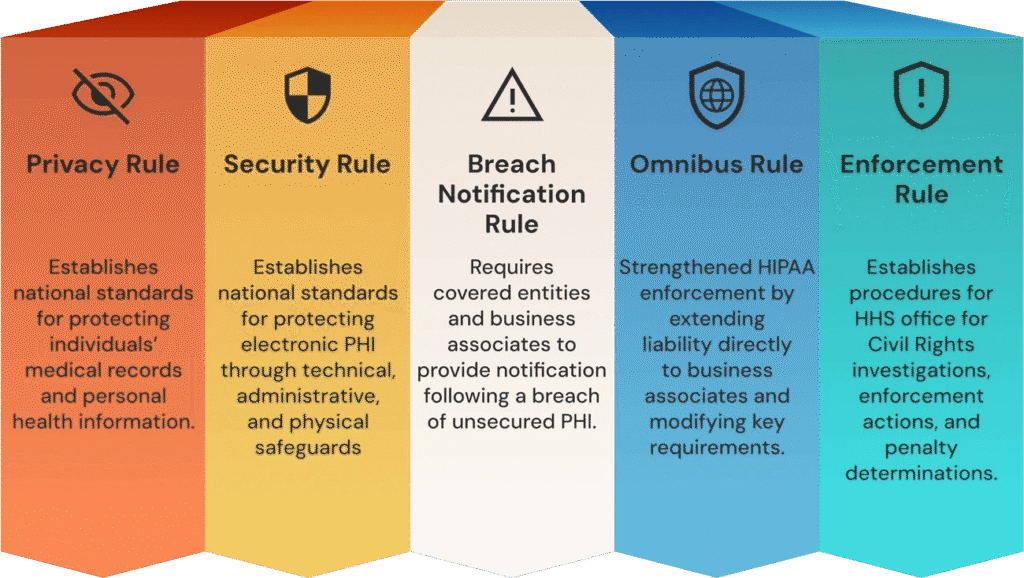
Yes, dental practices must follow HIPAA rules. Dentists are covered health care providers. This means they have to stick to all HIPAA rules. These include rules for Privacy, Security, and Breach Notification. This is true when they use any HIPAA standard transactions.
Is Google Ads an effective marketing tool for dental practices?
Google Ads has a big impact on dental practices. This pay-per-click platform lets dentists show ads to people looking for dental care nearby, which might bring in new patients.
What are the key elements of a HIPAA-compliant dental advertising strategy?
A HIPAA-compliant dental advertising strategy should get patient consent for testimonials, use secure website forms, not retarget based on health info, train staff on compliance, and team up with marketing agencies that know HIPAA rules.
How can dentists protect patient privacy while marketing their practice?
Dentists can keep patient information safe while promoting their services. They can do this by using CRM systems that follow HIPAA rules, setting up secure ways to communicate, and using tools that manage reviews without breaking rules. They can also use analytics platforms that don't collect personal details. To stay on the right side of the law, dentists should check their practices often and teach their staff what to do.